About the founder
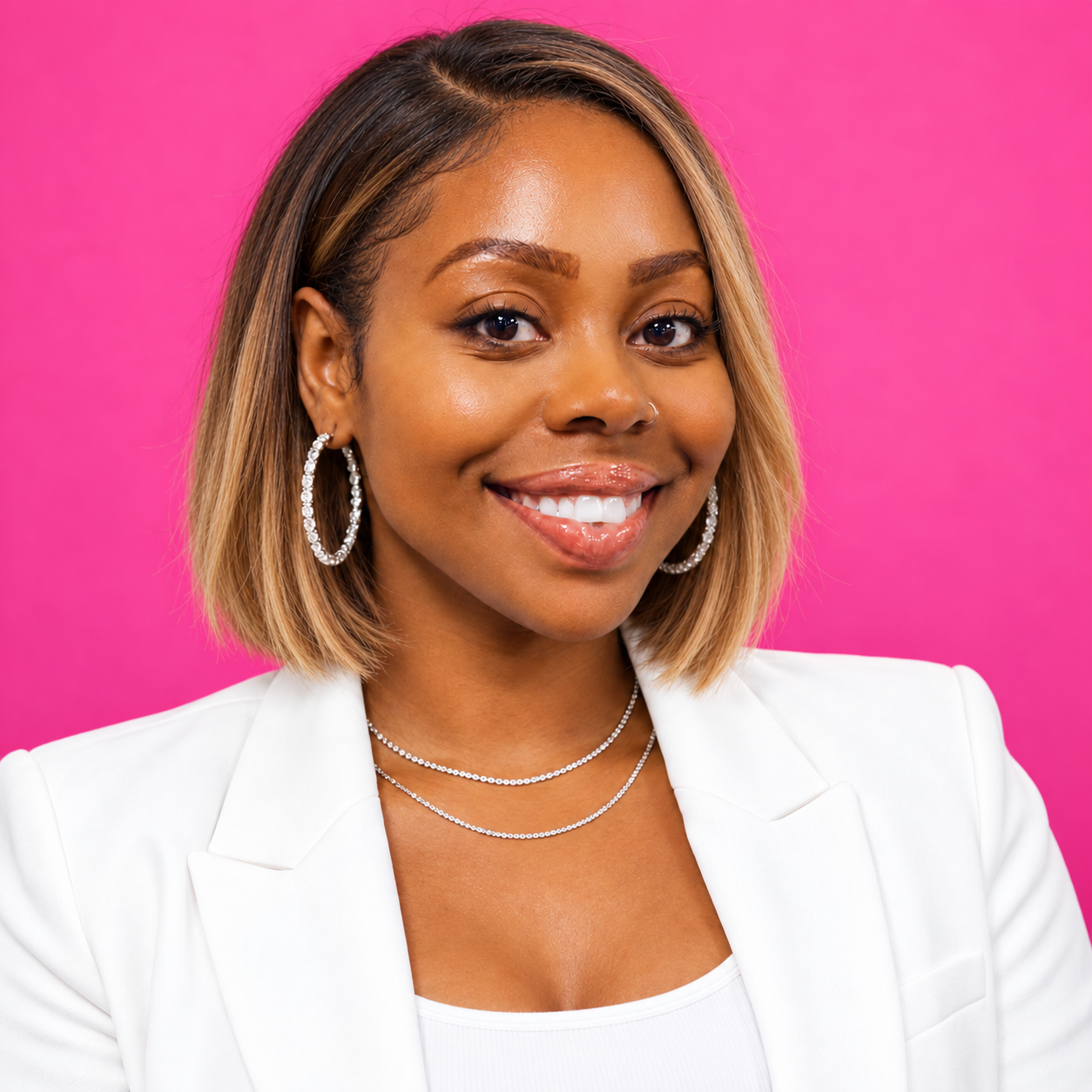
LaShea Conner-Gaten, Ed.M.
Founder & Chief Executive Officer
A transformation leader who has spent more than a decade helping large organizations turn ambition into execution — and who built CAI Collective Group so that same rigor reaches the people and communities usually left out of it.
Experience applied to emerging technology
Enterprise-scale transformation experience, brought to AI implementation.
- $1.8T+
- Combined enterprise value across organizations supported
- 119,000+
- Employees reached through enterprise programs
- $20M+
- Transformation portfolios governed
- 60+
- Teams and organizations aligned
These figures describe the scale of organizations and programs LaShea has supported across her career. They are context for experience, not attributed outcomes, client results, or endorsements by any prior employer.
The path here
From enterprise transformation to human-centered AI.
LaShea began her career in education and organizational development, where she learned early that the hardest part of any change is never the tool — it's whether people understand it, trust it, and can use it under real pressure.
That question followed her into consulting, where she served as a Chief of Staff and Greenhouse facilitator at Deloitte, designing and governing transformation portfolios for global organizations. She led cross-functional teams, built learning experiences for tens of thousands of employees, and sat in the rooms where strategy either turns into execution or quietly stalls.
When generative AI arrived, she watched the same pattern repeat at speed: enormous interest, scattered pilots, and very little governed implementation. Organizations were buying capability faster than they were building readiness.
She founded CAI Collective Group to close that gap — pairing enterprise-grade strategy and governance with learning that actually changes how people work. And she built the community platforms alongside it, because the same clarity that helps a leadership team should also reach a ninth grader, a returning citizen, or a small business owner with a good idea.
The story behind the work
From Chicago to San Diego.
LaShea grew up in Chicago, Illinois, and became a mother as a teenager. Her path into higher education and leadership was built while navigating motherhood, work, athletics, and the responsibility of creating a different future for her family.
She began her college journey at Parkland College, where she played collegiate basketball while raising her daughter, Imani Kirksy — earning her Associate of Science in Business Administration in 2008 before transferring to the University of Illinois Urbana-Champaign. At UIUC, she earned her Bachelor of Arts in Liberal Arts and Sciences, with a major in Speech Communication, in 2010, followed by her Master in Human Resource Development & Systems in 2012.
Her professional journey expanded across higher education, workforce development, organizational transformation, technology, consulting, and eventually artificial intelligence and executive leadership. In 2016, LaShea was offered an Assistant Director role at San Diego State University, prompting her to relocate her family to San Diego. What began as a professional opportunity became home.
She has remained deeply engaged in the San Diego community ever since — building relationships and initiatives across education, workforce development, business, technology, entrepreneurship, economic mobility, and community impact.
That community grounding eventually carried back into the enterprise world. LaShea served as Chief of Staff for Deloitte's Los Angeles Office Technology, Media & Telecommunications (TMT) practice, where she supported global AI and technology initiatives from the center of the room — and saw firsthand how strategy either turns into execution or quietly stalls. Those experiences ultimately contributed to the creation of CAI Collective Group.
CAI Collective Group
Human-centered AI with measurable impact.
CAI Collective Group was built around a fundamental premise: AI transformation is ultimately human transformation.
Before founding CAI, LaShea accumulated more than a decade of experience across consulting, advisory, technology, workforce development, and organizational transformation — including Chief of Staff leadership at Deloitte supporting global AI and technology initiatives.
“Technology should expand human potential, not replace it.”
At the center of the work is the intersection of artificial intelligence, organizational leadership, workforce transformation, education, economic mobility, emerging technology, and social impact. For LaShea, that belief is both professional and deeply personal.
The record
A career measured in finished work — enterprise and community, side by side.
Across her career and the CAI portfolio
- 12+ years of advisory and transformation experience
- 25+ enterprise transformations
- Work supporting organizations representing more than $1.8 trillion in enterprise value
- Transformation portfolios reaching 119,000+ employees
- Governance of $20M+ strategic portfolios
- Leadership of multidisciplinary teams as large as 121 professionals
Across community and ecosystem work
- 20+ strategic community and ecosystem partnerships
- Relationships spanning 14+ chambers and economic-development networks
- Approximately 95% workshop satisfaction through The Village on Main™
- Approximately 40% growth in partnership engagement
- Approximately 35% growth in community participation
- 60+ organizations expressing interest in the Fair Chance Orbit™ ecosystem
- A global AI education engagement designed to reach approximately 120 professionals across four cohorts
- Recognition through the 2026 Salesforce Agentforce for Good Hackathon
These figures describe the scale and reach of programs and partnerships LaShea has led or supported. They are context for experience, not client outcomes or endorsements by any organization named.
Today, CAI helps organizations move from AI experimentation to implementation across AI strategy, responsible AI, workforce transformation, organizational change, executive and leadership development, AI fluency, custom AI-enabled systems, learning experiences, economic mobility, and social-impact innovation.
The ethos
Trust is the whole business model.
Anyone can promise transformation. Credibility is earned the unglamorous way — scoping honestly, saying plainly what we know and what we don't, and finishing what we start. That is why every engagement here begins with a scope review instead of a sales pitch.
“We can't boil the ocean. We take it one opportunity at a time — and we finish what we start.”
Big promises are cheap. Real change happens when one team, one workflow, one community gets a result they can point to — then the next one, and the next. That compounding series of honest, finished work is the only marketing CAI Collective Group has ever done.
“You can't explain the ocean to a frog that's only known the pond.”
So we don't lead with the ocean. Change has to be incremental, and the first step is awareness — the “A” in Prosci's ADKAR change model. Awareness comes before desire, knowledge, ability, or reinforcement. Every CAI engagement starts by making the change visible and real to the people living it, then builds one step at a time from there.
What matters most
The principles behind every engagement.
These are not aspirations on a wall. They decide what work we take, how we scope it, and what we're willing to claim.
People before platforms
Technology only creates value when the people around it are prepared, trusted, and clear on what changes for them. Adoption is a human outcome, not a software feature.
Governance is not a brake
Clear decision rights, documented risk, and honest evidence are what let organizations move faster with less rework — not what slows them down.
Implementation over experimentation
A pilot that never reaches production is a cost, not a strategy. Every engagement is designed to land in real workflows with measurable results.
Access is part of the work
The same skills that make an executive team effective should reach students, returning citizens, and small businesses. Opportunity should not depend on proximity.
Say only what is true
No inflated claims, no borrowed credibility, no results we cannot stand behind. Trust compounds; hype does not.
What LaShea believes
- Clarity is a leadership skill, and it can be taught
- The people closest to the work usually know where it breaks
- Confidence grows from doing, not from being told
- Communities deserve the same rigor as boardrooms
- Evidence beats enthusiasm every time
- Everyone should be able to explain the tools they use
Think. Do. Transform.
If you're deciding how AI should actually work inside your organization, start with a scoped conversation — not a demo.